
Beyond Love Languages: Why Understanding Your Attachment Style is the Key to Connection
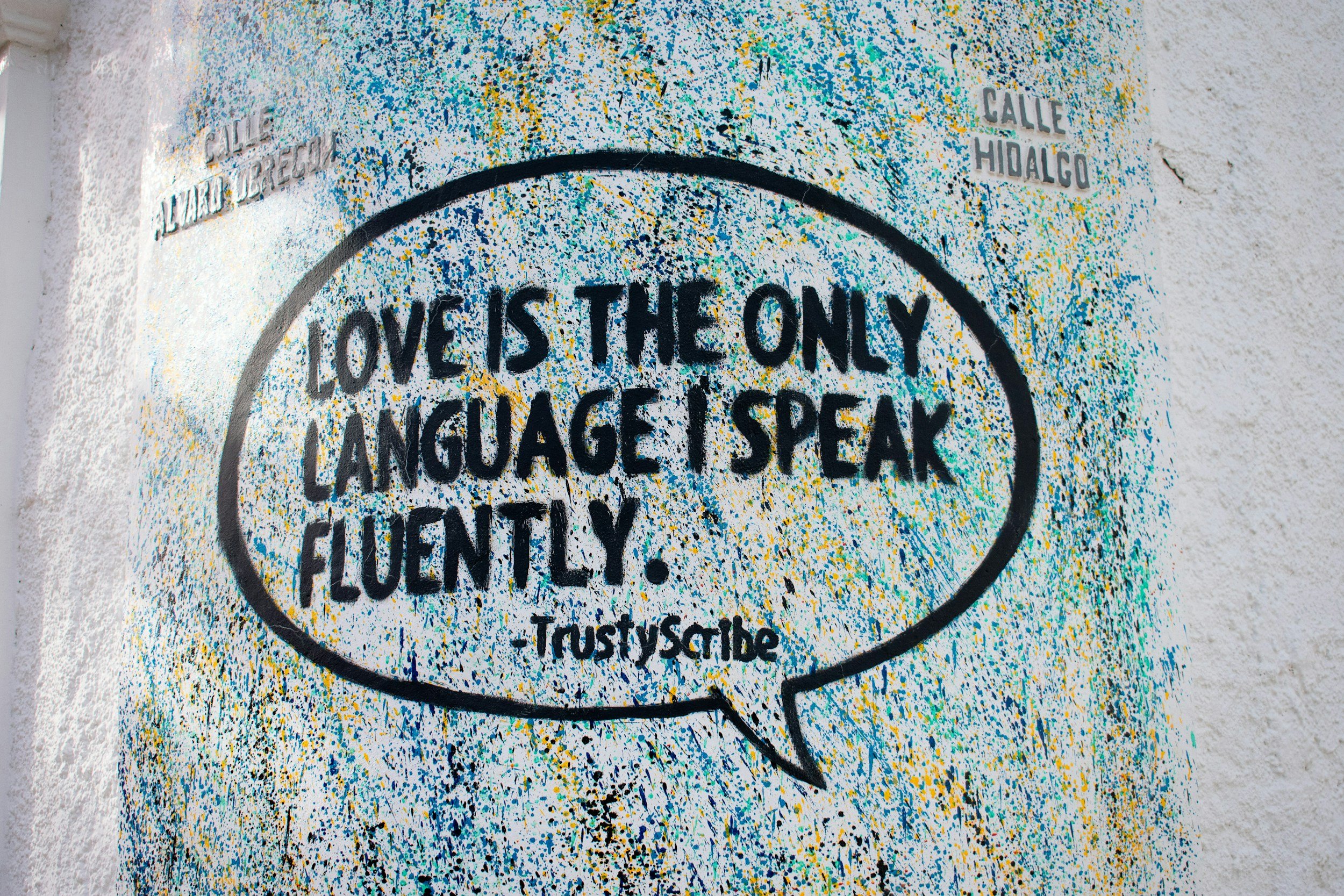
Do you know your love language?
In modern dating and pop psychology, this is often the first question we ask. We focus on whether we prefer words of affirmation or physical touch, believing it’s the secret key to a happy relationship. But while love languages are a helpful communication tool, they aren't exactly scientific.If you want to understand the true architecture of your relationships, the question you should really be asking is:
What is my attachment style?
Unlike many personality quizzes, Attachment Theory is backed by decades of rigorous clinical research. At Perception Psychotherapy, we believe that understanding your attachment style is the single most important step toward relationship awareness.
From the Cradle to the Grave
Attachment theory began with the work of John Bowlby, who observed that our earliest bonds with caregivers create a blueprint for how we relate to others throughout our lives. Later, Mary Ainsworth expanded this through her famous "Strange Situation" studies, where she observed how infants reacted to being separated from and then reunited with their parents.What they discovered was groundbreaking: these early interactions don't just fade away as we grow up. As the research highlights, attachment is a process that characterizes humans “from the cradle to the grave.” The way you sought comfort from your caregiver at age two is deeply linked to how you seek support from your partner at age thirty-two.
The Four Faces of Attachment
While everyone's experience is unique, research generally categorizes attachment into four primary styles. These styles are determined by two factors: your anxiety about the relationship and your avoidance of intimacy.
Secure Attachment: Comfortable with intimacy and usually don't worry about being alone or rejected. They have a solid "secure base script."
Anxious-Preoccupied: Crave high levels of intimacy and may become overly dependent. They are very sensitive to relationship "threats."
Dismissive-Avoidant: View themselves as "independent" to a fault. They distance themselves from others when things get too emotional.
Fearful-Avoidant (Disorganized): A mix of both anxious and avoidant traits. They want closeness but are simultaneously afraid of it.
The "Secure Base Script"
How does a childhood memory become an adult relationship habit? It happens through what psychologists call Internal Working Models (IWMs).
Think of these as the "mental software" running in the background of your mind. According to researchers Bretherton and Munholland, the building blocks of these models are "secure base scripts."
For the Secure Individual: You likely have a mental "script" that goes: "When I am hurt, I go to my person and receive comfort." This script allows you to use your partner as a "secure base"—a safe place to return to when life gets hard.
For the Insecure Individual: These scripts might have gaps or distortions. Instead of a clear path to comfort, your internal story might be: "When I am hurt, I am on my own," or "When I reach out, I might be rejected."
The Spectrum of Connection & The Power of Awareness
You might have heard that 50% of people are "secure" and the other half are "insecure." While that’s a helpful baseline, attachment exists on a spectrum. No one is 100% secure every minute of every day. We all have moments of anxiety or a desire to pull away when things get too intense.This is why awareness is the first and most vital step. Awareness is the "key" because it moves your reactions from the subconscious to the conscious. When you understand your style, you stop asking "Why is my partner doing this to me?"and start asking "What script is running in my head right now?" By identifying whether you tend toward anxious, avoidant, or disorganized patterns, you gain the power to pause before you react.
The Good News: It’s Not a Life Sentence
If you identified with one of the insecure attachment styles, here is the most important thing to remember: Attachment is not set in stone.
While our early "scripts" are written in childhood, they are not a life sentence. Although it is difficult to change, research shows that attachment is plastic—meaning it can change over time through consistent work and healthy relationship experiences. This journey is known as achieving Earned Security.
Achieving a more secure attachment style isn't about erasing your past; it's about updating your mental "software." It’s a process of identifying triggers, learning to self-soothe, and choosing partners who provide stability. Change takes time, but by bringing these subconscious patterns into the light, you can begin to navigate your relationships with more intention and peace.
Your past may have shaped your starting point, but it doesn’t have to dictate your destination.
Ready to rewrite your script?
Understanding your attachment style is the first step toward the connection you deserve. If you're ready to explore how your unique attachment patterns are impacting your life and relationships, our team at Perception Psychotherapy is here to support you. Click this link to get started with an introductory call.
REFERENCES:
Ainsworth MDS, Blehar M, Waters E, Wall S. Patterns of attachment: A psychological study of the strange situation. Hillsdale, NJ: Erlbaum; 1978.
Bowlby J. Forty-four juvenile thieves: Their character and home-life. International Journal of Psychoanalysis. 1944;25:19–52.
Bowlby J. The making and breaking of affectional bonds. London, UK: Tavistock; 1979.
Cassidy, J., Jones, J. D., & Shaver, P. R. (2013). Contributions of attachment theory and research: a framework for future research, translation, and policy. Development and psychopathology, 25(4 Pt 2), 1415–1434. https://doi.org/10.1017/S0954579413000692